
BUY
Dubai Real Estate ROI 2026: What Returns Can You Realistically Expect?
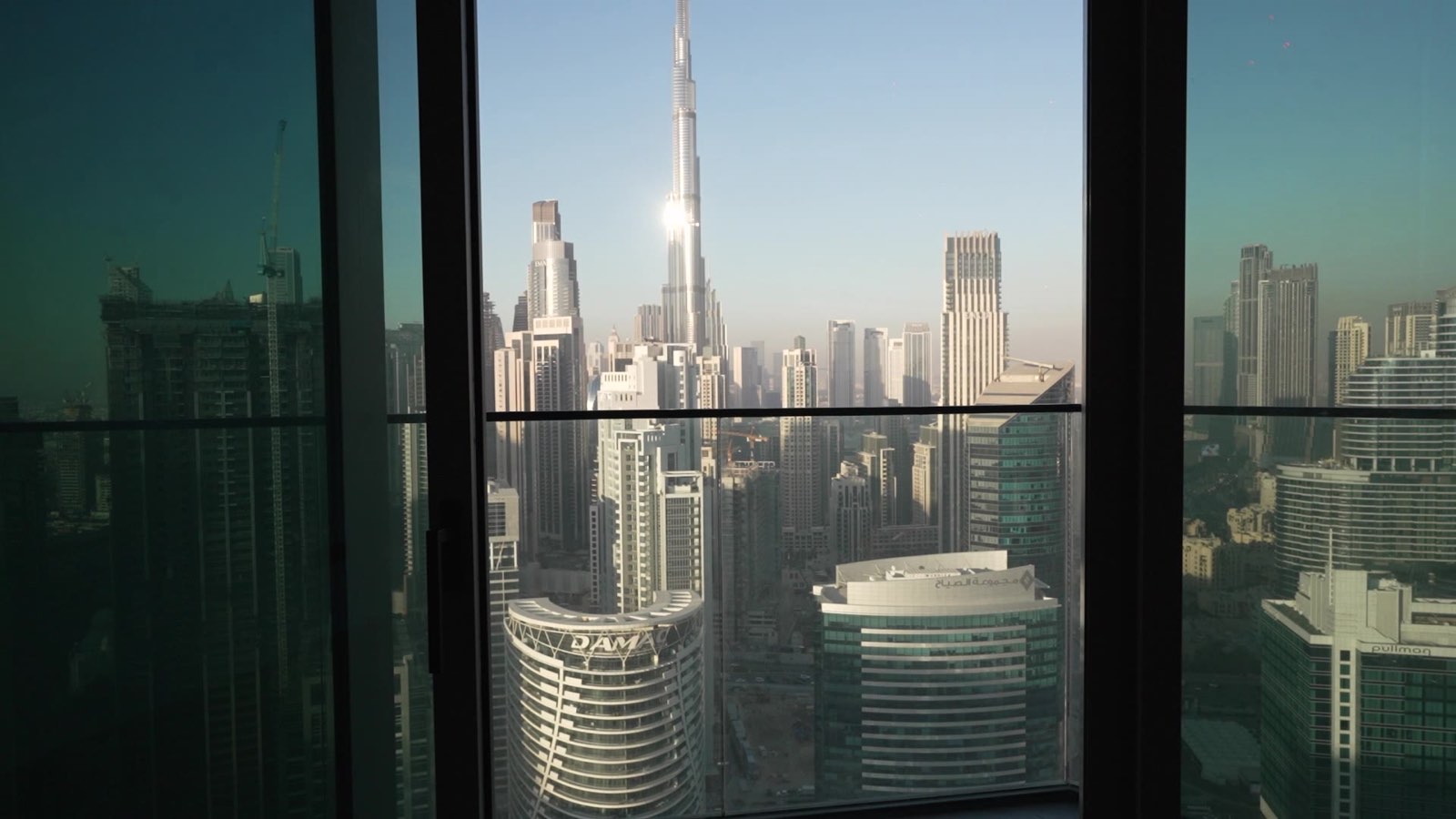
Dubai charges no income tax on rental income, no capital gains tax on property disposal for individuals, and no annual property tax[1]. A 7% gross yield here outperforms 10% in the UK after you account for what HMRC takes. Dubai real estate ROI is genuinely competitive, but the headline numbers circulate with enough creative accounting to warrant careful reading. Here is what returns actually look like in 2026, by asset class and location.
The Dubai ROI Advantage: No Tax
Before comparing Dubai yields to London, New York, or Sydney, one adjustment is essential. Dubai has no property tax, no annual council tax, no income tax on rental income, and no capital gains tax on property disposal for individual investors regardless of residency[1]. This is not a technicality. In most major property markets, tax takes a meaningful share of gross rental income and capital gains. In Dubai, zero is taken from individuals.
A 7% gross yield in Dubai is roughly equivalent to a 9-11% gross yield in the UK or Australia, after accounting for rental income tax and capital gains tax at disposal. For yield-oriented investors comparing markets, this single difference changes the allocation decision.
Note on STR costs: Short-term rental properties licensed under the Department of Economy and Tourism (DET, formerly DTCM) are subject to a Tourism Dirham fee (AED 10-15 per bedroom per night for standard holiday homes, up to 30 consecutive nights), a 7% Dubai Municipality fee, and 5% VAT on operator services[2]. Annual service charges apply in all Dubai residential buildings. These are real costs that belong in net yield calculations, not footnotes.
Rental Yield by Area: 2025-2026 Benchmarks
Long-term rental yields across Dubai in 2025-2026, drawn from portal transaction data and DLD rental index records[3][5][11]:
| Area | Asset Type | Gross Yield | Notes |
|---|---|---|---|
| International City | Studio/1BR | 8-10% | Highest gross yields in Dubai; lower absolute purchase prices mean more yield per dirham invested |
| Discovery Gardens | Studio/1BR | 8-9% | Strong tenant demand, good transport links, stable occupancy |
| Jumeirah Village Circle | 1-2BR Apt | 7-9% | Active buy-to-let market; watch rising supply in outer phases |
| Dubai Silicon Oasis | 1-2BR Apt | 7-8% | Tech-cluster tenant base; consistent occupancy with low void periods |
| Business Bay | 1-2BR Apt | 6-8% | Strong LTR and STR overlap; central location supports dual-use strategy |
| Dubai Marina | 1-2BR Apt | 6-8% | High and consistent demand; established secondary market for resale |
| Downtown Dubai | 1-2BR Apt | 5-7% | Premium address, lower yield than mid-market; historically stronger capital appreciation |
| Palm Jumeirah | Apt/Villa | 4-6% | Luxury segment; lowest gross yield, highest capital values, strongest STR premium rates |
| Arabian Ranches | 3-4BR Villa | 4-6% | Family community; long-term tenants, stable occupancy, low turnover costs |
| Dubai Hills Estate | 3-4BR Villa | 5-7% | Growing community with established schools nearby; strong family-tenant demand |
The pattern is consistent: outer communities with lower purchase prices produce higher gross yields. Prime central areas produce lower yields but historically stronger capital appreciation and better liquidity when you sell.

Prime areas like Downtown Dubai and Palm Jumeirah offer lower gross yields but strong capital appreciation and high market liquidity on resale.
Gross Yield vs Net Yield: Know the Difference
Gross yield divides annual rental income by the purchase price. It tells you very little about what you actually take home. Net yield strips out all operating costs. The gap between the two is where most Dubai yield disappointments live.
For a typical Dubai long-term rental in a mid-range area, the deduction from gross to net looks like this:
Sample ROI Calculation: 1BR Apartment, Business Bay (LTR)
Illustrative model, not a specific listing. Agency commission norm of 5% of annual rent[10]; service charge assumes a mid-tier tower at ~AED 20/sq ft[9].
In plain terms: on a AED 1.2M Business Bay apartment, you collect AED 90,000 in rent, spend AED 30,000 on operating costs and vacancy, and keep AED 60,000. That is AED 5,000 per month net, with no income tax owed on any of it.
How Short-Term Rental Compares on the Same Property
The same 1BR apartment in Business Bay, operated as a DET-licensed short-term rental with professional management, changes the numbers. Dubai's overall STR market ran at a median 73% occupancy with average daily rates around AED 638 in 2025-2026[4]; prime-area listings in Marina, Business Bay, Downtown, and Palm Jumeirah typically run 75-85% occupancy in peak season[4]. With a strong operator and prime location, gross annual revenue of AED 110,000-150,000 is achievable for a 1BR. After an 18% management fee, Tourism Dirham, 7% municipality fee, 5% VAT on operator services, utilities, linen, and maintenance, net yield of 8-11% on the asset is achievable[4].
That is 3-6 percentage points above the LTR net yield on the same asset. The trade-off is complexity: STR requires a licensed operator, active management, furnishing capital (typically AED 30,000-50,000 upfront for a 1BR), and tolerance for occupancy variance by season. Owners who use Stay® Property Management manage every element of that for a fixed management fee, with owner statements on the 10th and funds in account by the 15th of each month.
Capital Appreciation: What Has Dubai Delivered?
Dubai residential prices have risen materially since the post-pandemic recovery started in 2021. According to Knight Frank's Dubai Residential Market Review Q4 2024, overall Dubai residential prices rose 19.1% year-on-year in 2024, with villas up 20.2% and apartments up 18.9%; average values reached AED 1,685 per square foot[6]. Palm Jumeirah villas and ultra-prime units saw stronger growth still. The trajectory has moderated as supply has risen, but select areas continue to show positive appreciation.
Historically, Dubai has moved through three phases: rapid growth (2003-2008), sharp correction (2009-2011), recovery and stabilisation (2012-2020), and the current cycle (2021-present). Investors who held through the correction have, in most prime areas, recovered fully and accumulated additional upside. Investors who sold in 2009-2011 did not.
Capital appreciation is not guaranteed, and projecting it forward is speculative. The correct way to underwrite a Dubai property investment in 2026 is to ensure the yield alone justifies the purchase on your intended hold period, treating appreciation as upside rather than the base case.
Total Return: Combining Yield and Appreciation
Total return on a Dubai property investment equals net rental yield plus net capital appreciation. An illustrative total return across a 5-year hold on a mid-market apartment in a prime freehold area:
- Net rental yield (5 years): 5% per year (LTR) or 9% per year (managed STR)
- Capital appreciation (5 years): 3-8% per year (location and market-dependent)[6]
- Less transaction costs (4% DLD plus 2% agency on entry[8]; 2% on exit): approximately 2% per year amortised over 5 years
- Estimated total annual return: 6-15% depending on rental model and market conditions
At 0% tax on rental income and capital gains, that range compares favourably with most equivalent global markets on a net basis.

Total returns on Dubai property depend heavily on the rental model. Professionally managed STR consistently outperforms LTR in prime locations when occupancy is handled by a licensed operator.
What Reduces Net Returns in Dubai?
The most common reasons Dubai property investors underperform against expectations:
- Service charges on typical residential apartments run AED 12-30 per square foot per year, and AED 35-60+ per square foot on luxury towers like Palm Jumeirah and prime Downtown buildings; the RERA Mollak system regulates and publishes these[9]. Always verify before purchase.
- Extended vacancy between tenancies due to weak demand in the chosen location or poor tenant selection
- Poor STR operator selection: flat pricing, low occupancy, and poor guest management can cut gross revenue by 30-40% versus a well-managed comparable unit. Stay® Property Management applies daily rate optimisation and full operational management across its Dubai portfolio. Stay® is an Airbnb Superhost with a 5-star guest rating.
- Upfront furnishing costs for STR units, which need refreshing every 3-4 years and are often underestimated at acquisition
- Mortgage interest on leveraged assets: as of May 2026, fixed UAE mortgage rates start from around 3.79-3.85% for the initial fixed period, while variable rates linked to EIBOR (currently ~3.6-3.75% for 3-month) typically land at 5-6% all-in[7]. Leverage only improves returns on higher-yield assets where net yield comfortably exceeds the cost of debt after the fixed period.
- Over-supplied communities where new inventory continuously depresses both rents and resale prices
Frequently Asked Questions
What is the average rental yield in Dubai?
Gross LTR yields averaged around 6.8% across Dubai residential in 2025, with a typical range of 6-9% depending on tier[3]. STR properties in prime tourist areas can yield 8-12% net with a strong operator, after management fees, Tourism Dirham, 7% municipality fee, 5% VAT on operator services, and other operating expenses[4]. The gap between gross and net matters more than the headline number.
Is there property tax in Dubai?
No annual property tax, no income tax on rental income, and no capital gains tax on property disposal for individual investors regardless of residency[1]. A 7% gross yield in Dubai outperforms a 10% gross yield in the UK once you account for what HMRC takes from rental income and capital gains. This is Dubai's strongest return differentiator.
What are the best areas for rental yield in Dubai?
For LTR gross yield in 2025-2026: International City (8-9%), Discovery Gardens (8-9%), JVC (7-9%), and Dubai Silicon Oasis (7-9% on studios and 1BRs)[5]. For STR returns: Downtown Dubai, Dubai Marina, Palm Jumeirah, and Business Bay lead due to high occupancy rates (75-85% in peak season) and premium nightly rates from tourist and business travel demand[4].
How does Dubai real estate ROI compare to the UK or Australia?
Dubai's gross yields are comparable to many UK and Australian markets. Net yields are significantly higher because there is no tax on rental income or capital gains for individual investors[1]. A 7% gross yield in Dubai is broadly equivalent to 9-11% gross in a taxed environment, which means the same property produces materially more income retained by the investor.
Stay® Group
Stay® is an Airbnb Superhost, 5-star rated by guests, and winner of Best AI Tools at the Scale Middle East Awards 2026.
Stay® Group operates two divisions from one Dubai base: DET-licensed property management for owners who want results without the workload, and a RERA-licensed brokerage for investors looking to buy, sell, or build a portfolio with genuine market intelligence behind every decision. Whether you already own a Dubai property or are evaluating your first acquisition, the numbers in this article are the starting point. The conversation with our team is what turns them into a plan. staygroup.ae
See the Numbers for Your Property
Stay® Brokerage provides ROI projections for prospective buyers and existing owners considering a move to short-term rental. No commitment required. Message us with the keyword BUY or OWNER and we will build you a realistic projection for your specific asset.
Get Your Free ROI ProjectionRelated Articles
Can Foreigners Buy Property in Dubai? A Complete 2026 Guide
Off-Plan vs Ready Property in Dubai: Which Is the Better Buy in 2026?
Short-Term vs Long-Term Rental in Dubai: Which Earns More?
Sources
- Government of the UAE, Taxation (official portal). u.ae/en/information-and-services/finance-and-investment/taxation. Federal Tax Authority, Real Estate Investment for Natural Persons — Corporate Tax Guide CTGREI1, 2024. tax.gov.ae. Accessed 11 May 2026.
- Dubai Department of Economy and Tourism (DET), Holiday Homes Guide. hhpermits.det.gov.ae. DTCM Administrative Resolution No. 2 of 2020 (Tourism Dirham). dubaidet.gov.ae. Accessed 11 May 2026.
- Bayut, Dubai Rental Market Report H1 2025. bayut.com/mybayut/bayut-h1-2025-dubai-rental-market-report. Accessed 11 May 2026.
- AirROI, Dubai Short-Term Rental Market Report 2026 (median occupancy 73%, ADR AED 638; prime-area data for Business Bay, Dubai Marina). airroi.com/report/world/united-arab-emirates/dubai. GuestReady, Best Rental Yields in Dubai 2026. guestready.com/blog/best-rental-yields-in-dubai. Accessed 11 May 2026.
- Bayut, Highest Rental Yield Areas in Dubai 2025 (International City, Discovery Gardens, JVC). Property Finder, Dubai Yields by Area 2025-2026. bayut.com/mybayut/dubai-rental-market-report-2025. Accessed 11 May 2026.
- Knight Frank, Dubai Residential Market Review Q4 2024, January 2025 (residential prices +19.1% YoY in 2024; villas +20.2%, apartments +18.9%; average AED 1,685 psf). knightfrank.ae. Accessed 11 May 2026.
- Central Bank of the UAE, EIBOR Rates. centralbank.ae/en/forex-eibor/eibor-rates. Capital Zone, UAE EIBOR Rate Tracker May 2026 and Mortgage Rates Today UAE May 2026. capitalzone.ae. Accessed 11 May 2026.
- Property Finder, DLD Fees Dubai: Complete Costs Guide. propertyfinder.ae/blog/dld-fees-dubai. Dubai Land Department, official fee schedules. dubailand.gov.ae. Accessed 11 May 2026.
- Driven Properties, Service Charge Index in Dubai 2026 (DLD-regulated, Mollak system). drivenproperties.com/dubai-real-estate-market-guide/service-charge-index. Dubai Land Department, Service Charge Index. dubailand.gov.ae. Accessed 11 May 2026.
- Bayut, Hidden Cost of Renting in Dubai: Agency Fee, Deposits and More. bayut.com/mybayut/hidden-costs-renting-dubai. Property Finder, Additional Costs of Renting in Dubai. propertyfinder.ae. Accessed 11 May 2026.
- Oliva, Arabian Ranches Villa Rental Yields 2026 (DLD sale prices cross-referenced with DLD rental index). joinoliva.com. Accessed 11 May 2026.
Market data refreshed against Bayut, Property Finder, Knight Frank, AirROI, and Central Bank of the UAE on 11 May 2026. Yield ranges reflect 2025 full-year and H1 2025 portal data; mortgage and EIBOR figures are as of May 2026. Always cross-check current values before transacting.